
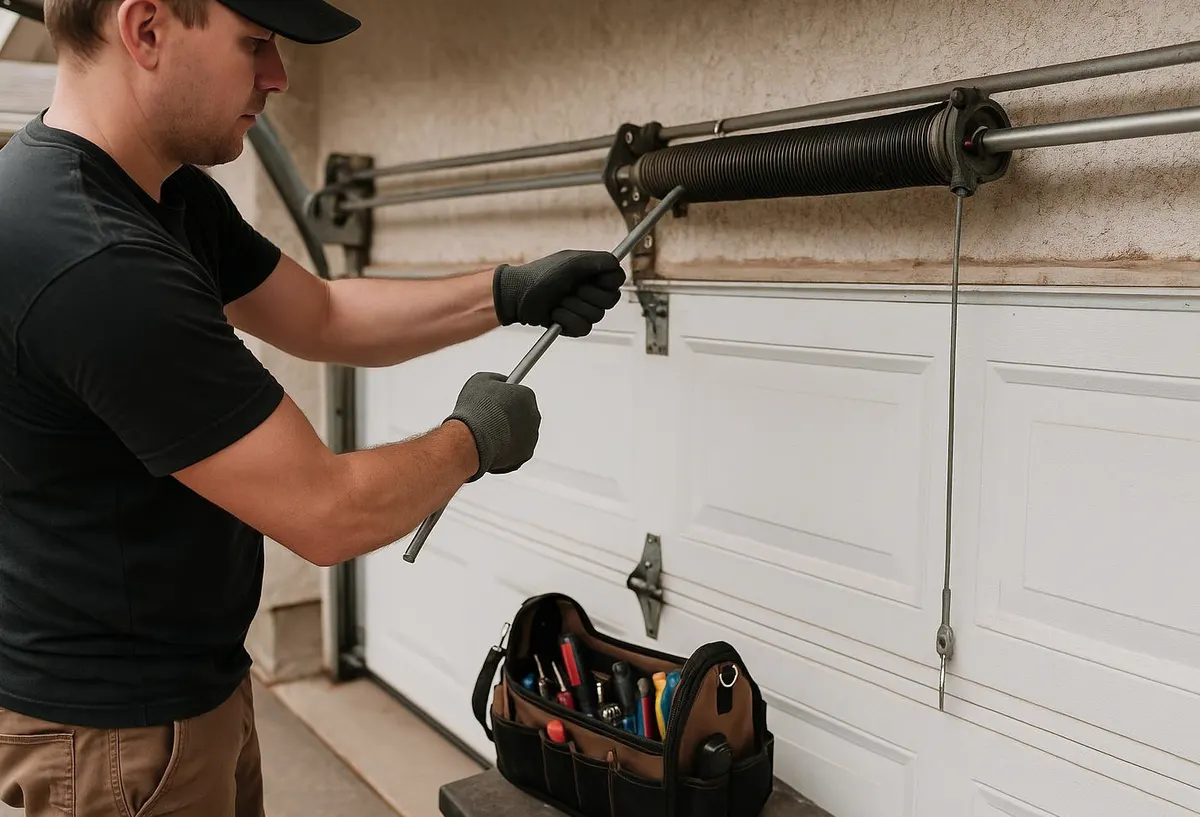
On a typical late-October call in this area, a technician usually finds one of two things: a door that's been sticking or groaning for weeks because the owner assumed it was "just the heat," or a door that got knocked slightly off track during a storm back in September and has been limping along ever since. Both are easy to miss day to day, and both get worse once temperatures start swinging between warm afternoons and cooler nights.
What Summer Humidity Left Behind
Months of heat and moisture do real damage to a garage door system, even if nothing looks obviously broken. Wood-composite panels can swell slightly and then not seat quite right in the track. Metal hardware — hinges, rollers, the track itself — can pick up a light film of surface rust, especially in garages that don't get much airflow. Springs that have been working harder in heat-expanded conditions all summer are carrying more wear than they show on the outside.
As the drier season sets in, that swelling starts to reverse. Panels that were tight all summer can suddenly rattle or shift slightly as they dry out and contract. This is a good window to actually look at your door in daylight: check for visible rust spots on springs and hinges, panels that don't line up evenly, and any grinding or popping sound when the door moves.
Cold Fronts and Temperature Swings
Winter here doesn't mean snow, but it does mean real temperature swings — warm, humid afternoons followed by cooler, drier nights, sometimes with a passing cold front that drops temperatures noticeably for a day or two. Garage doors respond to that kind of swing with small amounts of expansion and contraction in the weatherstripping and the door panels themselves.
The result is usually gaps: along the bottom seal, around the sides, or at the top where the door meets the frame. Small gaps let in dust, insects, and water from wind-driven rain. If you notice daylight coming through the edges of a closed door, or debris collecting along the bottom track, the seals have likely shrunk and are due for replacement — a simple, low-cost fix that keeps the garage interior dry and energy use reasonable if the space is conditioned.
Hurricane Season Isn't Fully Over
It's worth remembering that the Atlantic hurricane season officially runs through the end of November, so storm risk doesn't disappear the moment the calendar flips to fall. Garage doors in this region are built to specific wind-load standards for a reason — they're one of the largest openings in a home's exterior, and a door that fails during high wind can lead to serious structural damage inside the garage and beyond.
If your door took any hits this season — a tree branch, flying debris, or just strong gusts that rattled it in the track — don't wait until the next storm watch to find out it's compromised. A door that looks fine closed can still have a bent track, a stressed panel, or hardware that's slightly pulled from its mounting, all of which reduce its ability to hold up under wind load.
Salt Air and Rust, Especially Near the Coast
Homes closer to the coast — toward Naples, Marco Island, or Bonita Springs — deal with an added factor: salt air accelerates corrosion on exposed metal parts. Springs, bolts, hinges, and track hardware are the first places rust shows up, and once it starts, it spreads faster than most homeowners expect. A quick wipe-down and inspection of exposed metal components heading into the cooler months can catch rust before it compromises strength.
A Quick Winter-Ready Checklist
- Visually inspect springs, hinges, and tracks for rust or corrosion
- Check weatherstripping along the bottom and sides for gaps, cracks, or shrinkage
- Listen for new grinding, popping, or scraping sounds during operation
- Test the opener's auto-reverse safety feature and remote range
- Lubricate rollers and hinges with a garage-door-specific lubricant, not household oil
- Look for panels that no longer sit flush after months of humidity
When to Call Immokalee Garage Door
If you're seeing rust on the springs, hearing new noises, or noticing the door isn't sealing evenly along the bottom, it's time to have it looked at rather than wait for a full failure. Our team handles garage door maintenance and tune-ups to catch wear before it turns into a breakdown, and we also do off-track door repair for doors that got knocked out of alignment during this year's storm season. Both are quick visits that can save you from a spring snapping or a door jamming halfway through winter.
If you're in Immokalee, Ave Maria, Golden Gate, LaBelle, or anywhere nearby and want your garage door checked before the season turns, call Immokalee Garage Door — we'll get it sorted and get you back to a door that opens and closes the way it should.